Thyroid Doctor in New York City
Still exhausted despite thyroid treatment?
Still experiencing fatigue, brain fog or other persistent symptoms? Dr. Kellman takes a deeper look at your thyroid history, testing and possible contributing factors.
Calls answered Mon–Thu 9:30am–5pm, Fri 10am–2pm · In-person in New York City or telehealth · Fees & insurance
Watch Dr. Kellman explain thyroid testing
Talk with our team about your thyroid symptoms
Leave your name and number and we'll call you back, usually the same business day. Or call now and speak with us directly.
Call (212) 717-1118Calls answered Mon–Thu 9:30am–5pm, Fri 10am–2pm. Midtown Manhattan office or telehealth.
Our team will call you back, usually the same business day. If it's urgent, call (212) 717-1118.
Do you feel like your thyroid is the problem, but no one will look deeper?
- Your energy, weight or mood changed and nobody can say why
- You were told one TSH result tells the whole story
- You’re on medication and still don’t feel like yourself
You’re not alone. Many of Dr. Kellman’s patients arrive after years of unexplained symptoms and being told their labs look normal. His job is to keep looking.
Your symptoms deserve a more complete evaluation
Thyroid-related symptoms can overlap with other health concerns. If you still feel unwell despite prior testing or treatment, a consultation can help review your symptoms, medical history and whether additional evaluation is appropriate.
Why standard panels fall short
A TSH within the reference range is routinely read as proof of normal thyroid function. For many patients it is not — fatigue, weight change, cold intolerance, hair loss, dry skin, constipation, and cognitive fog persist while labs read as unremarkable.
This test is often unknown and underutilized by other physicians. Its absence is why so many patients cycle through years of appointments without an accurate answer.
The Kellman approach
Dr. Kellman is recognized for expertise in thyroid disease and for the depth of testing he brings to it, detecting low thyroid function more definitively than conventional screening allows.
Because thyroid function is regulated in concert with the gut and immune system, treatment addresses the microbiome and inflammation alongside hormone status rather than treating the gland in isolation.

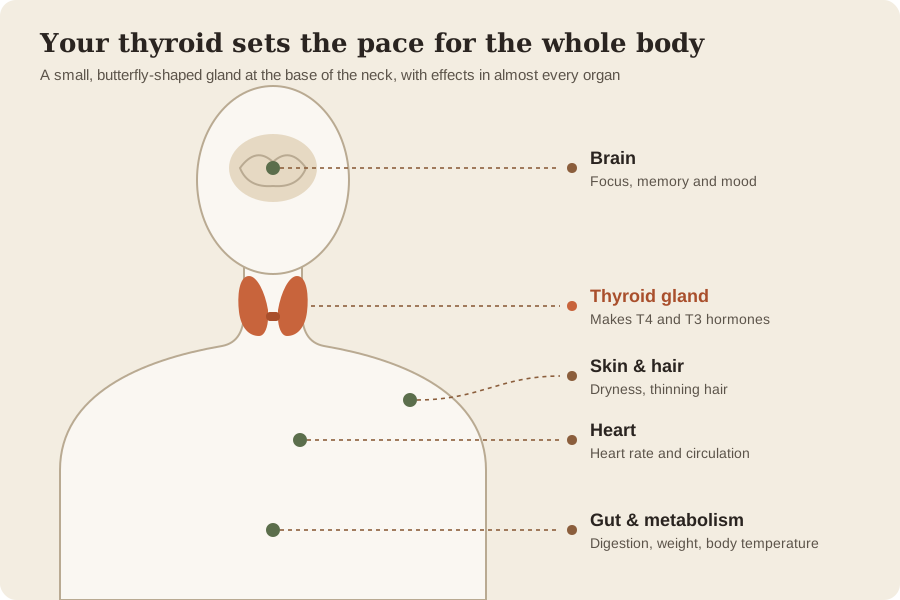
A thyroid doctor in Midtown Manhattan
Many patients come to Dr. Kellman after being told their thyroid is “fine” while they still feel exhausted, foggy or unable to lose weight. Thyroid care has been a central part of his practice for more than 25 years. He looks at the full picture: your symptoms, your results over time, your medications, and the gut and immune factors that can affect how thyroid hormone works.
Symptoms that often bring patients in include:
- Fatigue that doesn't improve with sleep
- Weight gain or difficulty losing weight
- Brain fog or trouble concentrating
- Feeling cold, hair thinning or dry skin
- Constipation or bloating
- Low mood
- Still feeling unwell while on thyroid medication
What a thorough thyroid evaluation can include
- TSH and free T4, the core thyroid tests, read alongside your earlier results rather than against the reference range alone.
- Free T3 and thyroid antibodies (TPO and thyroglobulin) to look for Hashimoto's and other patterns.
- TRH stimulation testing, when it is appropriate for your situation (see below).
- A look beyond the thyroid. Iron or B12 deficiency, anemia, sleep apnea, medication effects and other conditions can cause similar symptoms, and they are checked when your history calls for it.
- Gut and microbiome factors. Digestive problems can affect how thyroid medication is absorbed, and a slow thyroid can slow digestion.
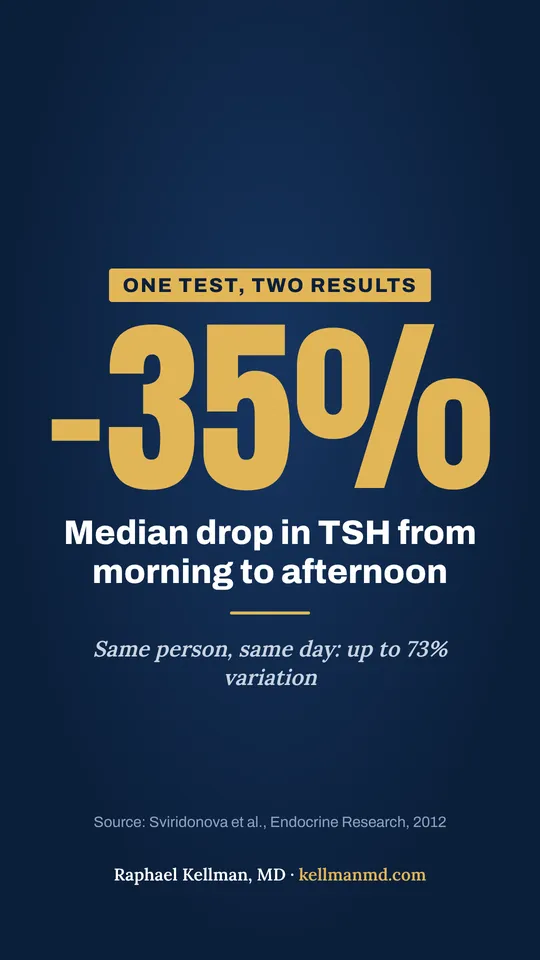
TRH stimulation testing
TRH stimulation testing has been a distinctive part of Dr. Kellman's clinical practice. Instead of measuring a single resting level, it looks at how the pituitary responds to a signal (TRH), using blood samples taken over a set period.
It isn't the right test for everyone. Modern TSH and free T4 tests answer most thyroid questions, and TRH testing is used selectively, when there is a specific question routine testing hasn't resolved. Before the test, Dr. Kellman explains what it can and can't show, how to prepare, and how the results would affect your plan. Don't stop any thyroid medication beforehand unless you are specifically instructed to.
Treatment that fits the cause
Treatment is based on what your evaluation finds. When thyroid hormone is needed, options include T4, T3 or combination therapy, with doses and timing monitored over time. Because the gut and immune system affect thyroid function, care may also address digestion, the microbiome, inflammation and nutrient status.
Related: Hashimoto's · Low thyroid (hypothyroidism) · SIBO and the thyroid
Common questions
My thyroid labs are normal but I have every symptom. Is that possible?
Yes, and it is one of the most common presentations at Dr. Kellman's practice. Standard screening can read as normal while thyroid function at the tissue level is impaired. More precise testing frequently identifies what the standard panel does not.
What does the microbiome have to do with the thyroid?
Thyroid hormone conversion and immune regulation both depend on gut function. Microbiome disruption can impair conversion and drive the autoimmune activity behind conditions like Hashimoto's, which is why Dr. Kellman assesses both together.
Is Dr. Kellman an endocrinologist?
No. Dr. Kellman is a medical doctor trained in internal medicine who practices functional and integrative medicine, and thyroid care has been a central focus of his practice for more than 25 years. He can work alongside your other doctors, including endocrinologists.
Should I stop my thyroid medication before testing?
No, not unless the clinician ordering the test gives you specific instructions. The time between your last dose and the blood draw can affect results, so make a note of when you took it.
What should I bring to my first visit?
Copies of past thyroid lab reports, ideally with dates, reference ranges and the medication doses you were on at the time, plus a list of your current medications and supplements.
Are thyroid blood tests covered by insurance?
Blood work is typically covered by insurance, but coverage varies by plan, laboratory and test. Dr. Kellman is out of network with all insurance carriers; the office can provide a claim for possible out-of-network reimbursement.
Get thyroid testing that actually answers the question.
Book a Consultation“He's helped me tremendously with my thyroid issues. He figured it out when traditional doctors told me my thyroid was normal. Turns out it wasn't.”
Google review · Oct 2025
“I have been going to Dr. Kellman for many years, he's the only doctor I trust to understand and manage my thyroid issues.”
Google review · Oct 2023
“Expert advice for thyroid and related gut issues.”
Google review · Apr 2026
Reviews are shared exactly as written by patients on Google. Individual experiences vary.