Hypothyroidism Symptoms & Low Thyroid Treatment in NYC
Low thyroid function is one of the most commonly missed diagnoses in conventional medicine — often dismissed when standard labs fall within "normal range."
Exhausted, cold and gaining weight, yet told your thyroid is “fine”?
- You sleep eight hours and still wake up tired
- Your hair is thinning and your skin feels dry
- Your TSH came back “normal,” but you don’t feel normal
You’re not alone. Many of Dr. Kellman’s patients arrive after years of unexplained symptoms and being told their labs look normal. His job is to keep looking.
Common symptoms
Why it's missed
Standard TSH testing has a wide "normal" range that can overlook meaningful dysfunction. Many patients with clear symptoms are told their labs are fine.
Dr. Kellman uses a highly precise thyroid test to detect low thyroid function more definitively — a test often unknown and underutilized elsewhere — combined with the gut-thyroid connection central to Microbiome Medicine.
What is hypothyroidism?
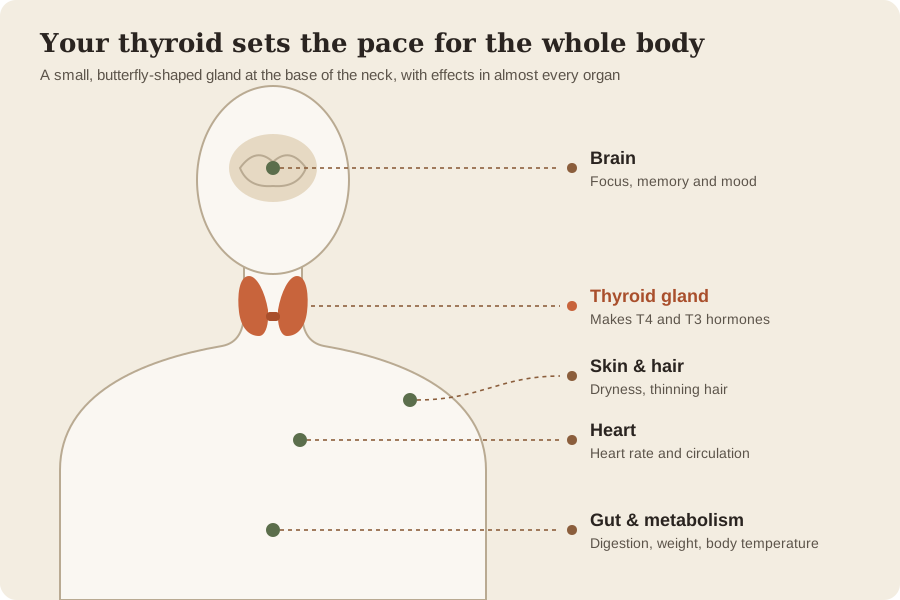
Hypothyroidism, or low thyroid, means the thyroid isn't producing enough thyroid hormone for the body's needs. Because thyroid hormone sets the pace of metabolism, low levels can slow almost everything: energy, digestion, temperature regulation, mood and thinking.

The TRH stimulation test
Normal TSH. Still feeling sick?
A standard TSH result is a single snapshot. The TRH stimulation test looks at how the signal from the brain to the thyroid responds, which can add information when symptoms and routine labs don’t match.
Raphael Kellman, MD · How the TRH test works →
How common is low thyroid?
Hypothyroidism is one of the most common hormone conditions in the United States:
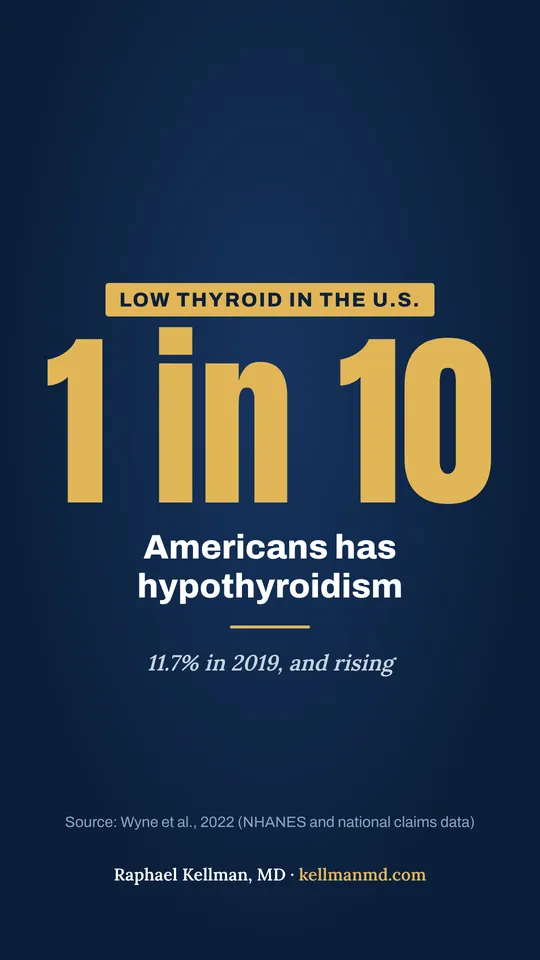
- About 1 in 10 Americans. A 2022 analysis of national health survey (NHANES) data found hypothyroidism in about 9.6% of the U.S. population in 2009–2012, and insurance claims data showed the rate rising from 9.5% in 2012 to 11.7% in 2019.1
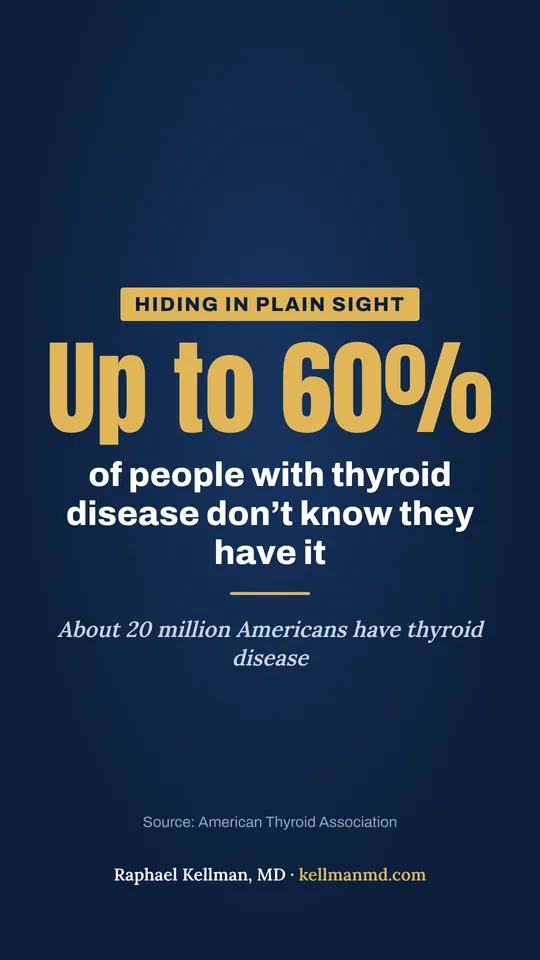
- Up to 60% don't know it. The American Thyroid Association estimates that 20 million Americans have some form of thyroid disease, and that up to 60% of them are unaware of their condition.2
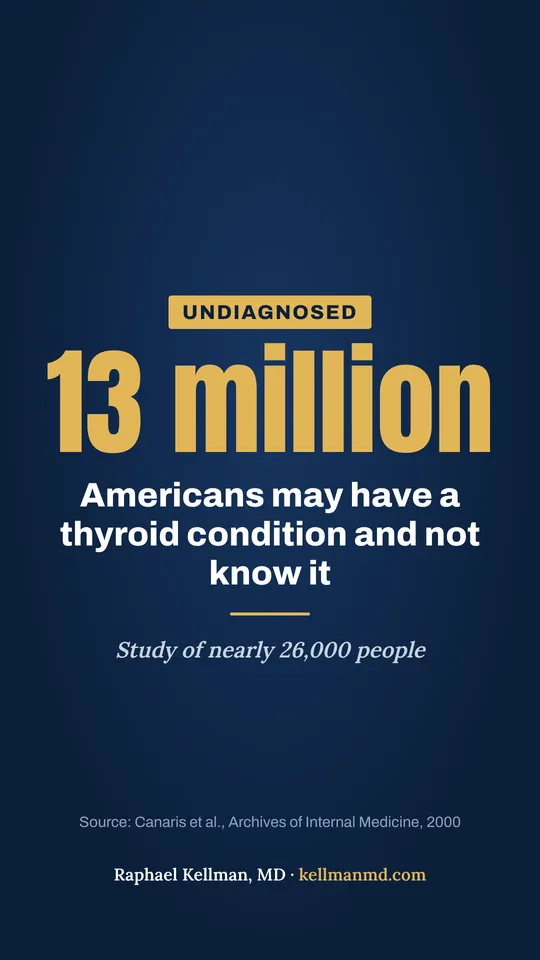
- Millions may be undiagnosed. The Colorado Thyroid Disease Prevalence Study, which tested more than 25,000 people, found raised TSH in 9.5% of participants and estimated that more than 13 million Americans may have an undiagnosed thyroid condition.3,4
- Treatment isn't always on target. In the same study, 40% of people already taking thyroid medication had TSH levels outside the normal range.3
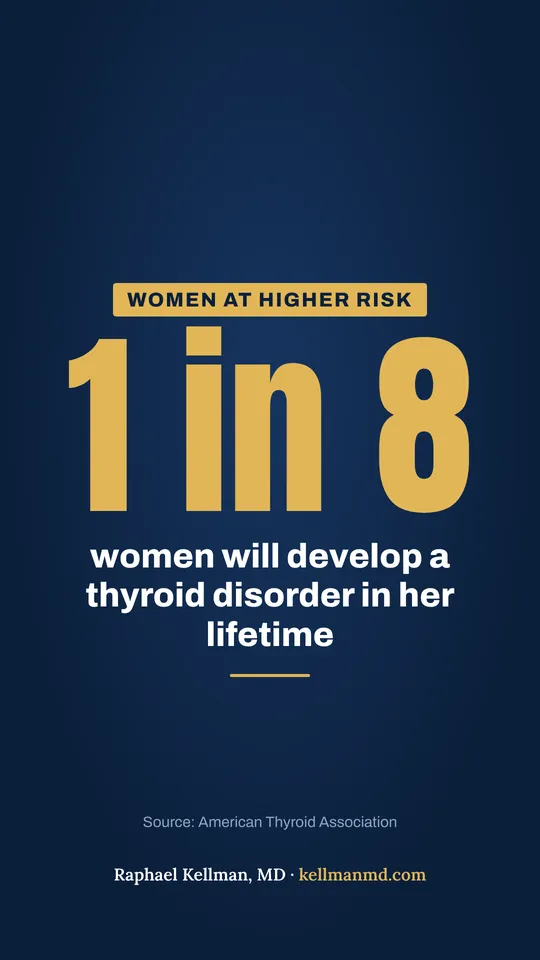
- Women are most affected. Women are five to eight times more likely than men to have thyroid problems, and about one woman in eight will develop a thyroid disorder in her lifetime.2
Many cases are mild or “subclinical,” and symptoms can be subtle and easy to attribute to stress, aging or busy lives, which is part of why low thyroid so often goes unrecognized.
Symptoms of hypothyroidism
Because thyroid hormone affects nearly every system in the body, low thyroid can show up in many ways. Symptoms usually develop slowly, over months or years:
- Energy and mood: fatigue, sluggishness, needing more sleep, low mood or depression
- Thinking: brain fog, poor concentration, forgetfulness (see brain fog)
- Weight and metabolism: weight gain or difficulty losing weight, feeling cold when others aren't
- Skin, hair and nails: dry skin, thinning hair or hair loss, brittle nails, thinning of the outer eyebrows
- Digestion: constipation and bloating
- Muscles and joints: aches, stiffness, cramps and weakness
- Heart and circulation: a slower heart rate and higher cholesterol
- Women's health: heavier or irregular periods and difficulty getting pregnant
- Other signs: a puffy face, hoarse voice or an enlarged thyroid (goiter)
Having one or two of these doesn't mean you have low thyroid, but a combination of them, especially fatigue, weight change, feeling cold and brain fog, is a good reason to have your thyroid checked. About thyroid testing →
Common causes of low thyroid
- Hashimoto's thyroiditis, an autoimmune condition and the most common cause of low thyroid in the United States
- Thyroid surgery or radioactive iodine treatment
- Certain medications
- Iodine deficiency, which is less common in the United States
- Less often, a problem with the pituitary or hypothalamus that reduces the signal to the thyroid (central hypothyroidism)
Mild or “subclinical” hypothyroidism
Some people have a mildly raised TSH while free T4 is still normal. This subclinical pattern doesn't always need treatment, but it deserves monitoring and a careful look at symptoms, antibodies and how results change over time.
Low thyroid and digestion
Thyroid hormone helps set the pace of the gut. When it's low, digestion can slow, contributing to constipation and bloating, and research has linked hypothyroidism with a higher rate of small intestinal bacterial overgrowth (SIBO). This connection is one reason Dr. Kellman evaluates the gut and the thyroid together. Learn about bloating →
For details on testing, including TRH stimulation testing, see thyroid evaluation and treatment and the TRH stimulation test.

Frequently Asked Questions
What causes thyroid issues?
Thyroid issues are most often caused by autoimmune attack (Hashimoto's disease), nutrient deficiencies, chronic stress, and gut microbiome imbalance, which can impair thyroid hormone conversion and regulation.
What are the signs of thyroid problems?
Common signs include persistent fatigue, weight gain resistant to diet and exercise, brain fog, hair thinning, cold intolerance, and low mood.
Why do my thyroid labs look normal if I have symptoms?
Standard TSH testing has a wide reference range that can miss meaningful dysfunction. More precise, comprehensive thyroid testing can reveal issues standard bloodwork overlooks.
How is low thyroid function treated?
Treatment may include bio-identical thyroid hormone therapy, addressing gut microbiome imbalance, and targeted nutrients — personalized to the root cause identified through advanced testing.
Can low thyroid cause bloating or constipation?
Yes. Low thyroid can slow digestion, which can contribute to constipation and bloating, and it has been linked with a higher rate of SIBO.
Can I have hypothyroidism with a normal TSH?
Usually TSH rises when the thyroid is underactive, but not always. In central hypothyroidism, for example, TSH may not rise as expected. A result inside the range also needs to be read alongside your symptoms, free T4 and your own earlier results.
What kind of doctor treats low thyroid?
Primary care doctors, internists and endocrinologists all treat hypothyroidism. Dr. Kellman is an internist whose practice has focused on thyroid and gut health for more than 25 years, particularly for patients who still feel unwell despite “normal” results.
How common is hypothyroidism?
Hypothyroidism affects about 1 in 10 people in the United States, according to a 2022 analysis of national survey and claims data. It is more common in women and in adults over 60.
What are the first signs of low thyroid?
Early signs are often subtle: fatigue, feeling cold, mild weight gain, dry skin, constipation and trouble concentrating. Because they develop slowly, they're easy to dismiss.
Sources: 1. Wyne KL et al. Hypothyroidism prevalence in the United States: a retrospective study combining NHANES and claims data, 2009–2019. J Endocr Soc. 2022;7(1):bvac172. 2. American Thyroid Association, General Information/Press Room (thyroid.org). 3. Canaris GJ et al. The Colorado Thyroid Disease Prevalence Study. Arch Intern Med. 2000;160(4):526–534. 4. University of Nebraska Medical Center news release on the Colorado study, Feb. 28, 2000. 5. Hollowell JG et al. Serum TSH, T4, and thyroid antibodies in the United States population (1988 to 1994): NHANES III. J Clin Endocrinol Metab. 2002;87(2):489–499.
Your labs may be "normal." Your symptoms aren't.
Book a Consultation“He's helped me tremendously with my thyroid issues. He figured it out when traditional doctors told me my thyroid was normal. Turns out it wasn't.”
Google review · Oct 2025
“I have been going to Dr. Kellman for many years, he's the only doctor I trust to understand and manage my thyroid issues.”
Google review · Oct 2023
“Expert advice for thyroid and related gut issues.”
Google review · Apr 2026
Reviews are shared exactly as written by patients on Google. Individual experiences vary.